WhatsApp
 Call Us
 Email Us
 Whatsapp Community

Would you like to schedule a call back





For thousands of Indians who spent years working in the US, a 401(k) isn't just another line item it's often the single largest asset they bring back with them. After a decade or two of disciplined saving and employer matching, most people assume they can simply leave the account alone until they need it. The first question that actually derails that plan is a deceptively simple one: is my 401(k) taxable in India?
The honest answer is yes, but not always, and not the same way for everyone. What actually happens to your 401(k) depends on your Indian residential status NRI, RNOR or ROR the type of account you hold, when you withdraw, whether Section 158 of the Income-tax Act, 2025 (the provision that replaced the old Section 89A) applies to you, what the India-US DTAA says, and whether you can claim Foreign Tax Credit. Get any of these wrong and you end up paying tax you didn't need to; miss a compliance step and you can lose relief you were actually entitled to. This is why understanding 401(k) taxation in India is essential before making any withdrawal decision.
This guide walks through all of it how the new Income-tax Act, 2025 treats foreign retirement accounts, the practical planning strategies we use with clients, and the mistakes that cost people the most.
A 401(k) is an employer-sponsored retirement plan available to employees in the United States, and it's one of the most widely used retirement vehicles precisely because it rewards long-term saving with real tax advantages. Employees typically contribute a portion of salary, often pre-tax in a Traditional 401(k) and many employers match those contributions up to a limit, which compounds the corpus considerably over time.
The money sits in mutual funds, ETFs, target-date funds or other options the employee picks, and it's meant to grow for years, sometimes decades, before it's touched. Unlike an ordinary brokerage account, early withdrawals can trigger additional US tax or penalties, subject to specific exceptions. For Indians who worked in the US on H-1B, L-1 or EB visas, or as permanent residents, this account is very often the single largest financial asset they bring home.
| Feature | Description |
|---|---|
| Employer-sponsored | Offered by a US employer as a retirement benefit |
| Employee contributions | Salary deductions invested toward retirement |
| Employer matching | Many employers add contributions of their own |
| Tax treatment | Traditional 401(k) generally grows tax-deferred; Roth 401(k) follows a different structure |
| Investment growth | Balances grow through market appreciation over time |
| Purpose | Built to fund income after retirement |
Yes, a 401(k) can be taxable in India but the answer turns entirely on your residential status (NRI, RNOR or ROR) and the specific relief provisions that apply to you, most notably Section 158, which replaces the earlier Section 89A and aligns Indian taxation with the timing of taxation in the country where the account actually sits. Because circumstances differ so much from one taxpayer to the next, there's genuinely no one-size-fits-all answer.
The decision shouldn't be made on tax alone; it depends on age, retirement goals, tax brackets on both sides, residential status, RNOR eligibility, Section 158, the DTAA and Foreign Tax Credit. For some people, an immediate withdrawal genuinely increases tax and penalties; for others, a phased approach wins out. There's no universal answer, but the real opportunity usually isn't whether to withdraw it's when, since most of the planning options disappear for good once the money is out.
For a lot of taxpayers, this is genuinely the most sensible route: the account stays invested and keeps growing, and you sidestep any immediate taxation that a withdrawal would otherwise trigger. It suits younger professionals, anyone without an immediate cash need, long-term retirement investors, and people who'd rather optimize withdrawals over several years than all at once. The trade-off is ongoing US compliance, eventual taxation on withdrawal, continued investment monitoring, and cross-border reporting obligations that don't go away just because the account is untouched.
A rollover into an Individual Retirement Account is mainly an investment decision; it usually means more investment choice, better portfolio flexibility, and an easier way to consolidate several old employer plans into one. But it carries real tax implications too, so it needs to be checked from both the US and Indian side before you execute it, not just evaluated as a portfolio move.
Some people withdraw right after relocating to buy a house, fund a child's education, invest in a business, repay a loan, or simply simplify their finances. It can look appealing, but it's often the least tax-efficient of the three options, potentially triggering US federal tax, state tax, early-withdrawal penalties, Indian tax, cash-flow strain, and the loss of years of future growth all at once. This is a decision worth planning, not rushing into.
| Your Situation | Possible Strategy |
|---|---|
| Under 45 | Continue holding the 401(k) unless you genuinely need the liquidity |
| 45–60 | Evaluate phased withdrawals based on your tax position |
| Near retirement | Consider coordinated retirement-income planning |
| RNOR status | Review planning opportunities before it lapses into ROR |
| Immediate cash need | Consider a partial withdrawal rather than full liquidation |
| Large retirement corpus | Build a long-term withdrawal strategy instead of a lump sum |
This table is indicative of only getting professional advice before making any decision here that can't be undone.
The single biggest factor in how your 401(k) gets taxed in India is your residential status under the Income-tax Act not, as many people assume, simply the date you happen to land back in India. Residential status is recalculated every financial year based on the statutory conditions, so the tax implications of your US retirement account can genuinely shift from one year to the next.
If you continue to qualify as an NRI, your 401(k) generally stays outside the scope of Indian taxation unless the income is received in India or otherwise becomes taxable under the Act. Simply owning the account while living abroad doesn't, by itself, create an Indian tax liability though US taxation continues to apply under US domestic law regardless.
For most returning Indians, the RNOR phase is the single most valuable planning window they'll get. It sits between being an NRI and becoming a full ROR, and during it, certain foreign income can continue to receive beneficial treatment depending on its nature and the applicable provisions. This is exactly why we recommend reviewing retirement accounts, brokerage portfolios and compensation arrangements before the RNOR window closes, not after a well-planned strategy during this phase can meaningfully cut future tax costs.
Once you're a Resident and Ordinarily Resident, India generally taxes your global income, which brings your US retirement income into scope too. That doesn't mean you automatically pay tax twice, relief is available through Section 158, the India-US DTAA, and Foreign Tax Credit. What you actually owe depends on the timing of distributions, the type of account, tax already paid in the US, and whether your Indian reporting is in order.
| Residential Status | Is a 401(k) Taxable in India? | Planning Opportunity |
|---|---|---|
| NRI | Foreign retirement income generally stays outside Indian taxation unless the Act makes it taxable | High |
| RNOR | Depends on the nature of the income and applicable provisions often the richest planning window | Very High |
| ROR | Global income generally becomes taxable, subject to DTAA and Section 158 relief | Moderate |
No and this is one of the more persistent misconceptions we run into. A 401(k) isn't a single lump of taxable income; it's made up of several components that each deserve their own look: employee contributions, employer contributions, investment appreciation, dividends and interest earned inside the account, and the eventual distributions themselves. The tax treatment depends on Indian domestic law, applicable treaty provisions, and the specific relief available for notified retirement accounts not simply on the account balance or the amount withdrawn.
Not every 401(k) is taxed the same way, and this distinction carries through into the Indian analysis too.
This is the plan most Indians working in the US actually end up with. Contributions are typically made from pre-tax salary, which lowers taxable income during the contribution years, and the investments grow tax-deferred until distributions begin, which is usually when US tax kicks in. Employers often match contributions, and early withdrawals can attract additional tax or penalties under US law, subject to exceptions.
A Roth 401(k) works on the opposite principle: contributions come from after-tax income, and qualified distributions can be tax-free in the US. What trips people up is assuming that tax-free status carries straight over to India. It doesn't happen automatically. Indian taxation still depends on domestic provisions, treaty benefits and the rules governing foreign retirement accounts, so a Roth withdrawal needs its own independent analysis rather than an assumption borrowed from the US side.
| Particulars | Traditional 401(k) | Roth 401(k) |
|---|---|---|
| Employee contributions | Generally pre-tax | Generally after-tax |
| Current US tax benefit | Yes | No |
| Investment growth | Tax-deferred | Qualified growth may be tax-free under US rules |
| Withdrawals in the US | Generally taxable | Qualified withdrawals may be tax-free |
| Indian tax analysis | Depends on residential status, Section 158 and DTAA | Needs its own separate analysis US treatment doesn't carry over automatically |
One of the more common myths is that India taxes a 401(k) every single year simply because the investments inside it are growing. That's not accurate different stages of the account can carry different consequences, and each deserves its own look rather than a blanket assumption:
Before 2021, there was a genuine mismatch in how the two countries taxed foreign retirement accounts: the US generally taxed retirement income only on withdrawal, while India could tax residents on accrued income under its own principles. That timing gap meant the same income could, in theory, get taxed twice not through any intent to evade tax, but simply because the two systems didn't line up in time. Section 89A was introduced into the Income-tax Act, 1961 to fix exactly that, letting eligible taxpayers defer Indian taxation so it broadly matched the foreign country's timing.
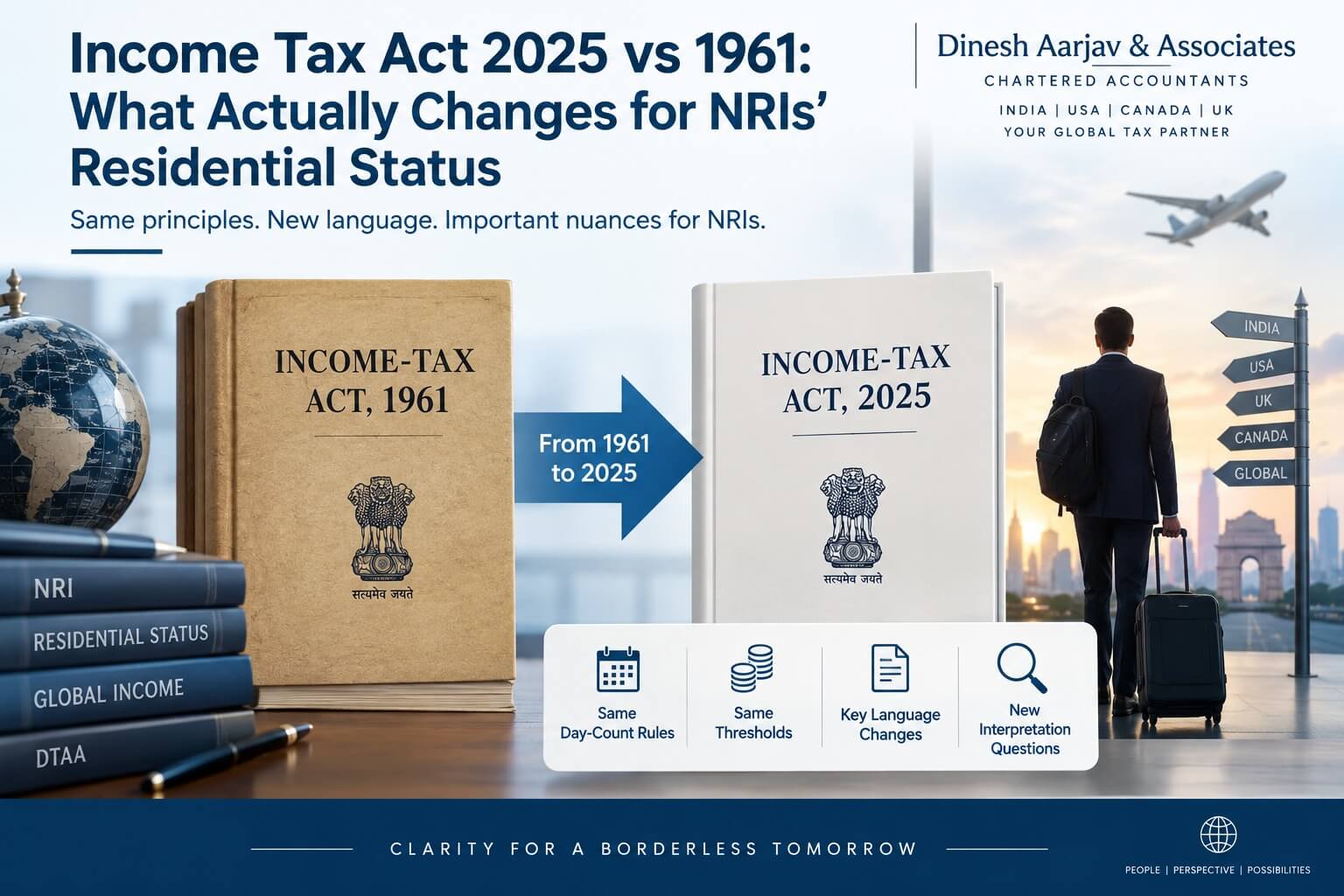
With the Income-tax Act, 2025 now in force, the numbering has changed, though the substance hasn't: Section 89A has become Section 158, Rule 21AAA has become Rule 74 of the Income-tax Rules, 2026, and Form 10EE has become Form 40. This matters practically because plenty of people are still searching for “Section 89A” online, while current compliance runs entirely through Section 158 and Form 40.
| Income-tax Act, 1961 | Income-tax Act, 2025 |
|---|---|
| Section 89A | Section 158 |
| Rule 21AAA | Rule 74 |
| Form 10EE | Form 40 |
| Relief for notified foreign retirement accounts | Relief continues under the new law |
| Objective: prevent timing mismatch | Objective remains unchanged |
Section 158 does not exempt your 401(k) from tax, and it doesn't remove your obligation to report foreign retirement income where required. What it does is make sure eligible taxpayers aren't disadvantaged simply because India and another country tax retirement income at different points in time. Broadly, it reduces timing mismatches, aligns Indian taxation with the foreign jurisdiction for notified accounts, prevents double taxation caused purely by differing tax systems, and gives returning Indians more certainty. It's a timing-relief provision, not a blanket exemption that distinction matters more than almost anything else in this guide.
Eligibility always needs to be checked against the notified rules, but broadly, Section 158 is meant for taxpayers who hold specified foreign retirement accounts, have become Indian residents, are taxed in another country on distributions from those accounts, and satisfy the prescribed conditions under Indian law. Because eligibility is genuinely fact-specific, this is worth getting professional advice on before relying on it.
Section 158 doesn't operate alone; it works together with Rule 74, which sets out the procedural framework for exercising the option and the conditions that apply. Substantive relief and procedural compliance go hand in hand here; satisfying one without the other doesn't get you the relief.
Under the old law, claiming Section 89A relief meant filing Form 10EE. Under the Income-tax Act, 2025, Form 40 now does that job for Section 158. It needs to be filed within prescribed timelines, and missing that step can affect whether the relief is actually available to you regardless of whether you'd otherwise have qualified.
A quick real-world illustration of why this matters: Rahul worked in California for ten years and built up roughly USD 600,000 in a Traditional 401(k). Not understanding that the relief simply continued under a new section number, he assumed it had disappeared entirely and liquidated the account immediately after returning triggering immediate US taxation, a much larger taxable amount landing in one year, and real cash-flow strain he could have avoided with a phased withdrawal instead.
Two myths worth killing outright: Section 89A has not been abolished, only renumbered as Section 158 the relief framework continues; and Section 158 does not make every 401(k) tax-free, it addresses the timing of taxation, not whether tax applies at all.
One of the biggest worries for anyone returning to India with a 401(k) is whether they'll end up paying tax on the same money twice, once in the US, once in India. DTAA between India and USA exists precisely to reduce that risk, allocating taxing rights between the two countries and, in appropriate cases, allowing relief where the same income is taxed by both.
What the DTAA does not do is automatically exempt your 401(k) from tax. It works alongside each country's domestic law, applied only after the taxability of the income has already been worked out under domestic rules. For most taxpayers, the real, practical benefit shows up through the Foreign Tax Credit mechanism rather than through the treaty exempting anything outright.
No, probably the most common misconception in this entire area. Having a DTAA in place doesn't mean only one country gets to tax the 401(k). In many cases, the US taxes the distribution under its own domestic law, and India taxes the same income once you're an ROR, subject to Section 158 and other provisions. What the DTAA actually does is let you claim credit for tax paid in the other country, so you're not bearing the full tax twice; it's a relief mechanism, not an exemption.
The treaty's guidance on pensions and retirement income still has to be read alongside several other factors: the nature of the account, residential status, country of residence at the time of distribution, domestic provisions on both sides, Section 158 relief, and how the income is characterized. This is not a topic to settle from a generic online article.
Foreign Tax Credit is one of the most valuable relief tools available to returning Indians. If you've already paid US tax on a 401(k) distribution, India may let you claim credit for that tax when working out your Indian liability, subject to Indian law. The principle is simple: the same income shouldn't be taxed twice just because two countries both have a claim to it.
Say a USD 100,000 withdrawal is taxable in both countries: you paid USD 20,000 in US federal tax, and the Indian tax attributable to that same income works out to the equivalent of USD 24,000. Rather than paying the full amount in both countries, you'd generally be able to claim credit for the US tax already paid and pay only the difference in India, assuming all the conditions for FTC are met. The credit isn't unlimited; it's generally capped at the Indian tax attributable to that specific doubly-taxed income. This example is illustrative only; the real number depends entirely on your own facts.
A lot of FTC claims get denied purely for lack of paperwork held onto US tax returns, payment confirmations, Form W-2 and Form 1099-R, evidence of tax withheld, and your exchange-rate calculations. And keep the Indian side of the compliance in mind too: FTC is generally claimed by filing Form 67 with the required documentation, within prescribed timelines. Plenty of taxpayers get the US side right and then forget this step, losing the credit even though the tax was genuinely paid abroad.
Traditional 401(k) distributions generally stay subject to US federal tax regardless of where you live, depending on the nature of the distribution, your US tax residency, withholding rules and treaty provisions.
Plenty of taxpayers focus entirely on the tax owed and overlook the reporting side paying the right tax doesn't excuse incomplete disclosure. As an ROR, this typically means Schedule FA for the 401(k) itself as a foreign asset in your Income Tax Return, Schedule FSI for any taxable foreign income, and Schedule TR where FTC is being claimed with the numbers across all three lining up precisely, since a mismatch between foreign income, tax paid, FTC claimed and exchange rates is a common trigger for delays or a department query.
| Compliance Item | Importance |
|---|---|
| Determine residential status | Critical |
| Evaluate Section 158 eligibility | Critical |
| Review DTAA applicability | Critical |
| Maintain US tax records | High |
| Preserve withholding documents | High |
| Claim Foreign Tax Credit where applicable | Critical |
| File Form 67 where required | Critical |
| Report foreign assets appropriately | Critical |
| Review Schedule FSI and other disclosures | High |
| Coordinate Indian and US tax filings | Critical |
A lot of taxpayers underestimate just how valuable the RNOR phase is. It's often the single richest planning window a returning Indian will get once it ends and you become an ROR, several of these options simply aren't available anymore. Worth reviewing together during this window, as one picture rather than account by account: retirement accounts, brokerage portfolios, employer stock, deferred compensation, RSUs, ESPPs and foreign bank accounts. This planning works best when it starts before you even relocate mapping out your expected residential status, RNOR window, planned retirement age, and existing portfolio several months ahead of the actual move, since waiting until you're already an Indian resident narrows the options considerably.
Withdrawing everything immediately. Assuming the whole 401(k) should come out before leaving the US this tends to push people into higher tax brackets, trigger early-withdrawal penalties, and permanently erase future investment growth.
Ignoring Section 158. Still relying on outdated Section 89A references without realising the relief simply continues under a new number and missing eligibility they'd otherwise have qualified for.
Forgetting Foreign Tax Credit. Paying tax in both countries and never actually claiming the credit that would have offset it genuine, avoidable double taxation.
Ignoring Schedule FA. Leaving foreign retirement accounts off the Indian return entirely, which tends to invite exactly the scrutiny it was meant to avoid.
Assuming a Roth 401(k) is automatically tax-free in India. US tax treatment doesn't carry over; each jurisdiction applies its own rules independently.
A large, one-time withdrawal deserves the same scrutiny; it tends to mean a higher US tax bill, a bigger chunk of Indian taxable income landing in a single year, reduced FTC efficiency, and a higher effective tax rate overall. A phased approach can, depending on your facts, offer more flexibility and a noticeably better outcome.
It's easy to think of a 401(k) purely as a retirement account and forget it's also part of your broader estate worth periodically revisiting for beneficiary nominations, US estate-tax exposure, and Indian succession planning, ideally right after relocation rather than only after retirement. This is exactly the kind of planning our estate planning team helps returning families work through.
A 401(k) is often the single largest asset an Indian professional brings back from the US and it's also one of the most misunderstood, cross-border tax included. What you actually owe depends on your residential status, the type of account, when you withdraw, Section 158, Rule 74, the DTAA and Foreign Tax Credit, all interacting at once rather than any one of them in isolation.
There's no universal playbook. One person is better off holding the account; another does better with phased withdrawals or a rollover, depending entirely on their retirement goals and tax position. What matters most is making these decisions with full information, before acting. That's what actually protects retirement savings, limits double taxation, and keeps you compliant on both sides of the DTAA.
We specialise in India-US cross-border taxation and have advised thousands of NRIs and returning Indians on exactly this the taxation of foreign retirement accounts. Our work covers 401(k) and IRA taxation, RNOR and ROR advisory, Section 158 and Form 40 compliance, DTAA interpretation, Foreign Tax Credit planning, and Indian and US return filing. As part of our NRI tax advisory services, whether you're still planning your move or have already relocated, we can help build a strategy that actually fits your numbers.
CA Priyal Goel Jain is a Partner at Dinesh Aarjav & Associates and a leading expert in India–US cross-border taxation, NRI taxation, and international tax advisory. She advises NRIs, OCIs, and global families on complex cross-border transactions, tax planning, foreign asset reporting, and multi-jurisdictional compliance matters.






Stay in the loop, subscribe to our newsletter and unlock a world of exclusive updates, insights, and offers delivered straight to your inbox.

.webp)