WhatsApp
 Call Us
 Email Us
 Whatsapp Community

Would you like to schedule a call back





Filing an Income Tax Return (ITR) is not simply about paying income tax. Your ITR is the formal record of your income, deductions, taxes paid and other information that you report to the Income Tax Department.
For some taxpayers, filing an income tax return is mandatory. For others, filing an ITR can still be extremely useful for example, when claiming an income tax refund, carrying forward eligible losses, applying for a loan or maintaining a clear financial record.
With the rules and ITR forms changing over time, one of the most common questions taxpayers have is: Do I need to file an ITR, and if yes, which ITR form should I use?
This guide explains the key ITR filing requirements in India, the different ITR forms applicable to individuals and HUFs, important filing conditions and the consequences of filing your return late.
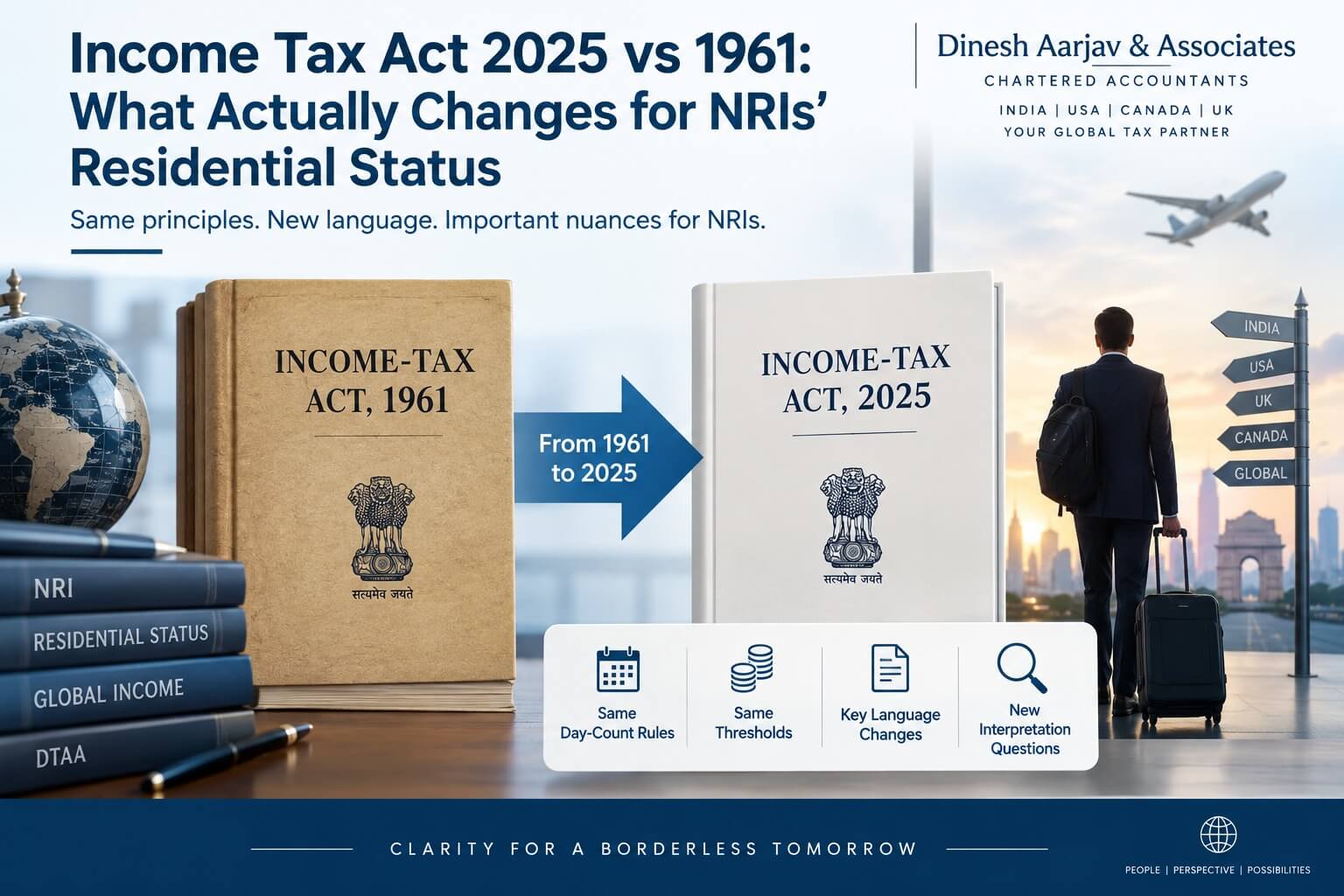
For FY 2025-26 / AY 2026-27: Income earned during FY 2025-26 is reported in the Income Tax Return for Assessment Year (AY) 2026-27 under the Income Tax Act, 1961. The Income Tax Department has also clarified that AY 2026-27 continues to be governed by the old Act despite the transition to the new tax law from 1 April 2026.
An Income Tax Return, commonly called an ITR, is a return filed with the Income Tax Department containing details of your income and applicable tax liability for a financial year.
Depending on your circumstances, your ITR may include income from:
The ITR also allows you to report taxes already paid, including TDS and advance tax, and claim eligible tax refunds or other benefits.
In simple terms, an ITR tells the Income Tax Department how much you earned, how much tax was payable, how much tax you have already paid and whether any additional tax or refund is due.
The requirement to file an ITR depends on more than just whether you actually have tax payable.
Broadly, an individual is required to file an income tax return when their income crosses the applicable maximum amount not chargeable to tax, subject to the provisions applicable to the relevant year.
However, there are also specific circumstances in which an individual may have to file an ITR even when their income is below the basic exemption threshold.
These include prescribed conditions relating to certain high-value financial transactions and other circumstances.
You may be required to file an income tax return if, during the relevant previous year, you:
These conditions are important because having income below the basic exemption limit does not automatically mean that you are exempt from filing an ITR.
The prescribed conditions should always be checked for the relevant assessment year before deciding that a return is not required.
Yes, there can be good reasons to file an income tax return even when you are not otherwise required to do so.
If excess tax has been deducted from your salary, interest income or other income, you generally need to file an ITR to claim the refund.
For example, your employer may have deducted more TDS than your final tax liability. Filing your return allows the Income Tax Department to determine the correct tax position and process an eligible refund.
If you have certain business, professional or capital losses, timely filing of the return can be important if you want to carry forward those losses and set them off against eligible future income.
The rules differ depending on the nature of the loss. Therefore, simply filing a belated return should not be treated as equivalent to filing the original return within the due date.
An ITR is often used as supporting financial documentation when applying for:
For self-employed individuals, freelancers and business owners in particular, ITRs can provide a useful record of declared income.
Some visa applications and immigration processes may ask for income tax returns or tax-related financial documents as evidence of financial standing or income history.
The exact requirements depend on the country and type of visa.
Regular ITR filing creates a documented history of your declared income and taxes.
This can become particularly valuable when your income changes significantly, you start a business, make investments, purchase property, or, in cases involving NRIs Selling Property, need to demonstrate your financial position in the future.
Choosing the correct ITR form is one of the most important parts of income tax return filing.
For individual taxpayers and HUFs, the most commonly relevant forms are ITR-1, ITR-2, ITR-3 and ITR-4.
The correct form depends on your residential status, sources of income, total income, business or professional income and certain other conditions.
ITR-1 is generally applicable to a resident individual who is not ordinarily resident, subject to the prescribed conditions, with total income up to ₹50 lakh.
For AY 2026-27, eligible income can include:
However, ITR-1 cannot be used in several situations.
For example, ITR-1 is not applicable if the taxpayer:
Therefore, being a salaried employee does not automatically mean that you should file ITR-1.
Your other income and circumstances also matter.
ITR-2 is generally applicable to individuals and HUFs who:
ITR-2 can therefore cover a much wider range of taxpayers than ITR-1.
For example, an individual may need to consider ITR-2 where there are applicable capital gains, foreign assets or income, directorship in a company, unlisted equity shares or other circumstances that make ITR-1 unavailable.
ITR-2 can also be used where total income exceeds ₹50 lakh, subject to the other eligibility conditions.
ITR-3 is applicable to individuals and HUFs having income from profits and gains of business or profession, where the taxpayer is not eligible to file ITR-1, ITR-2 or ITR-4.
It can cover income under multiple heads, including:
Business owners, professionals and certain individuals with business or professional income may therefore need to file ITR-3.
ITR-4 is a simplified return form available, subject to eligibility conditions, to certain:
It is generally relevant where business or professional income is computed on a presumptive basis under Sections 44AD, 44ADA or 44AE.
For AY 2026-27, the prescribed total income limit for ITR-4 is ₹50 lakh, along with the other eligibility requirements.
ITR-4 is not mandatory for every taxpayer who qualifies. It is a simplified return form that can be used by an eligible taxpayer choosing to declare income under the presumptive taxation provisions.
|
ITR Form |
Generally applicable to |
Key point |
|
ITR-1 (Sahaj) |
Eligible resident individuals with total income up to ₹50 lakh |
Mainly salary/pension, one house property, specified other sources and eligible Section 112A LTCG |
|
ITR-2 |
Individuals and HUFs without business/professional income who cannot use ITR-1 |
Commonly relevant for capital gains, foreign income/assets and other ITR-1 exclusions |
|
ITR-3 |
Individuals and HUFs with business/professional income |
Used where ITR-1, ITR-2 or ITR-4 is not applicable |
|
ITR-4 (Sugam) |
Eligible individuals, HUFs and resident firms using presumptive taxation |
Relevant to eligible income under Sections 44AD, 44ADA and 44AE |
This is only a broad guide. The correct ITR form should be selected based on your complete tax profile and the conditions applicable for the relevant assessment year.
The Income Tax Department also provides a “Help me decide which ITR form to file” service to help individual taxpayers determine the applicable form and schedules.
The due date depends on the taxpayer and whether an audit or other reporting requirement applies.
For many individual taxpayers who are not required to get their accounts audited, the due date for AY 2026-27 was 31 July 2026.
The Income Tax Department’s filing guidance should be checked for the applicable due date in your particular case.
For example, the Income Tax Department currently specifies 31 August 2026 as the due date for ITR-4 for AY 2026-27.
It is important not to assume that every taxpayer has the same ITR filing deadline.
Missing the original due date does not necessarily mean that you can no longer file a return.
A taxpayer may generally file a belated income tax return, subject to the applicable law and time limit.
For AY 2026-27, the Income Tax Department states that a belated return may be furnished on or before 31 December 2026, or before completion of assessment, whichever is earlier.
However, filing late can have financial and procedural consequences.
Under Section 234F of the Income Tax Act, 1961, the delayed filing fee for AY 2026-27 is:
Interest may also be payable where there is outstanding tax liability.
A taxpayer filing a belated return may lose the ability to carry forward certain losses.
This is particularly relevant for taxpayers with:
The treatment depends on the type of loss and the applicable provisions.
If a taxpayer is entitled to an income tax refund, filing late can affect the timing and interest associated with the refund.
Therefore, waiting until after the due date simply because there is no tax payable is not necessarily a good idea.
The exact documents required depend on your sources of income, but individuals commonly need:
One important point: do not rely only on Form 16 while filing your ITR.
Your ITR should reflect your complete income and tax position. Reconcile your income and taxes with your AIS, Form 26AS, bank records and other relevant documents before submitting the return.
This is a common source of confusion.
The Financial Year (FY) is the year in which you earn the income.
The Assessment Year (AY) is the year in which that income is assessed and the corresponding income tax return is filed.
For example:
FY 2025-26 → AY 2026-27
So, if you earned salary, business income, capital gains or interest between 1 April 2025 and 31 March 2026, you generally report that income in the ITR for AY 2026-27.
Paying TDS does not automatically mean that you do not need to file an ITR.
TDS is simply tax deducted or collected at source.
You still need to determine your final tax liability after considering:
If excess tax has been paid, filing an ITR can allow you to claim the resulting refund.
Yes.
This is an important point for salaried taxpayers.
A person receiving salary does not automatically qualify for ITR-1. Other factors can change the applicable ITR form.
For example, an individual with salary income may need ITR-2 if they have circumstances that make ITR-1 unavailable, such as certain capital gains, foreign assets or income, directorship in a company or holdings of unlisted equity shares.
Similarly, salary income combined with business or professional income can potentially require ITR-3 or, where the conditions are satisfied, ITR-4.
A zero tax liability does not by itself answer the question of whether you need to file an ITR.
Your filing obligation depends on the applicable provisions and your circumstances.
For example, the Income Tax Department has specifically reminded taxpayers that zero tax does not automatically exempt a person from filing an ITR where the applicable filing conditions are satisfied.
Therefore, taxpayers should check both their income and the prescribed mandatory-filing conditions rather than looking only at the final tax payable.
Timely ITR filing can save you from unnecessary complications later.
It can help you:
For taxpayers with investments, business income, foreign assets or multiple sources of income, early filing also gives more time to identify discrepancies and correct errors before the filing deadline.
Income tax return filing in India has become more than a once-a-year compliance exercise. For many taxpayers, the ITR is an important financial document that records income, taxes paid, investments and other financial information.
The most important step is to identify whether you are required to file an ITR and then select the correct ITR form.
Do not assume that you should file ITR-1 simply because you are salaried, or that you do not need to file because your final tax payable is zero. Capital gains, foreign assets, business income, professional income, investments and certain financial transactions can change your filing requirement.
For FY 2025-26 / AY 2026-27, taxpayers should also be particularly careful because the year falls during the transition from the Income Tax Act, 1961 to the new income-tax law framework.
If your tax affairs involve multiple income sources, capital gains, business or professional income, foreign assets, NRIs or other complex matters, professional tax advice can help ensure that the correct return is filed with the required disclosures.
Important: Tax rules, forms, due dates and filing requirements can change. This article is intended for general information and should be read together with the latest notifications, rules and guidance issued by the Income Tax Department.
For the latest ITR applicability and filing guidance, taxpayers should refer to the official Income Tax Department e-filing portal.
Q1. What is the late filing fee for ITR?
For AY 2026-27, the late filing fee under Section 234F is ₹1,000 where total income does not exceed ₹5 lakh and ₹5,000 in other cases.
Q2. Can I file ITR after the due date?
Yes. A belated return can generally be filed within the prescribed time limit, subject to applicable conditions, late filing fee and other consequences.
Q3. Can I claim a refund without filing an ITR?
Generally, an income tax refund arising from excess tax paid is claimed through the income tax return.
Q4. Can I carry forward losses if I file my ITR late?
Certain losses may not be eligible for carry forward when the return is filed after the prescribed due date. The treatment depends on the nature of the loss and the applicable provisions.
Q5. How do I know which ITR form to file?
The applicable ITR depends on your residential status, income sources, total income, business or professional income and other prescribed conditions. The Income Tax Department’s “Help me decide which ITR form to file” facility can also assist taxpayers in identifying the appropriate ITR form.
CA Disha Bansal is a tax professional at Dinesh Aarjav & Associates specializing in US taxation, India–US cross-border tax advisory, and NRI tax compliance. She advises individuals and NRIs on US tax return preparation, international reporting requirements, cross-border tax planning, and navigating complex India–US tax matters, helping clients manage their global tax obligations efficiently and compliantly.






Stay in the loop, subscribe to our newsletter and unlock a world of exclusive updates, insights, and offers delivered straight to your inbox.

.webp)