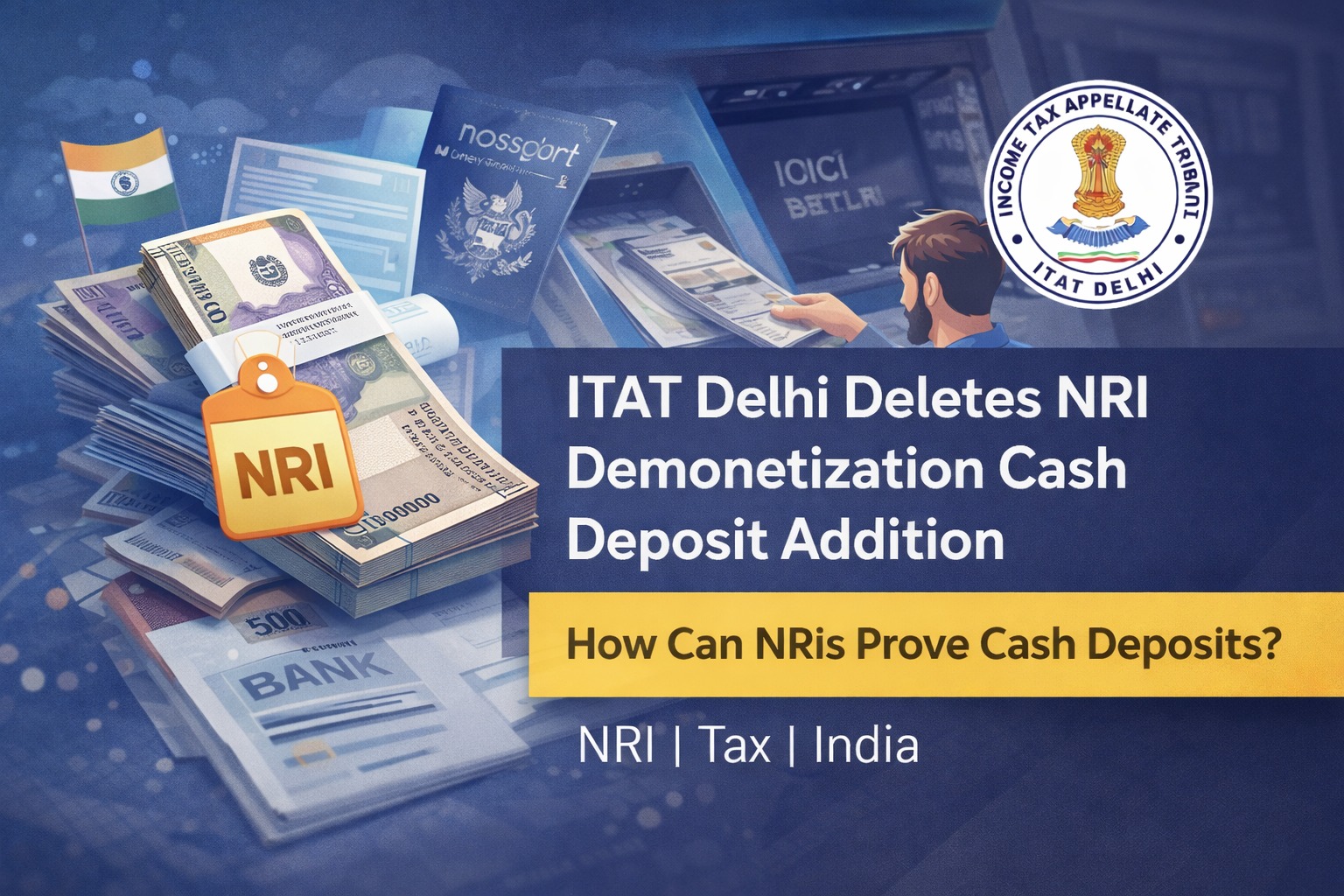
Are demonetization cash deposits taxable for NRIs in India? No. If the deposit is supported by genuine NRI remittances, past savings, and reasonable documentation, it should not be treated as unexplained income. In Arun Bussi vs ACIT (ITAT Delhi, AY 2017-18), the Tribunal deleted an addition of ₹11.18 lakh and rejected application of Section 115BBE.
Why This Case Matters for NRI Taxation in India
This ITAT Delhi ruling is important for NRIs based in the USA, UK, Canada, UAE, Australia, and Singapore who:
- Send money to India for parents or family maintenance
- Maintain NRO or NRE bank accounts in India
- Deposited cash during demonetization (November–December 2016)
- Are facing income tax scrutiny or notices for unexplained cash deposits
Case Summary: Arun Bussi vs ACIT (ITAT Delhi)
Key Facts
- Assessee: NRI residing in the USA with no Indian income
- Cash Deposit: ₹11,18,500 during demonetization
- Source Explained As:
- Foreign remittances via MoneyGram
- Cash brought during visits to India
- Funds accumulated with elderly parents over multiple years
Action by Assessing Officer (AO)
- Treated deposit as unexplained income under Section 68/69
- Applied Section 115BBE (tax rate ~60%+)
ITAT Delhi Judgment (2026)
Key Observations
- Assessee had no income source in India
- Funds were consistent with remittances from abroad and savings
- Elderly parents cannot be expected to maintain detailed records
- AO failed to identify any alternative undisclosed income source
Final Outcome
- Addition of ₹11.18 lakh deleted
- Section 115BBE not applicable
- Appeals allowed in favor of the assessee
Key Legal Principles for NRIs
- NRI cash deposits during demonetization can be explained through remittances
- Unexplained cash provisions (Section 68/69) require the AO to prove alternative income
- Section 115BBE applies only where income is genuinely unexplained
- NRI remittances to India are not taxable again
- Reasonable explanation supported by evidence is sufficient
Practical Scenarios Covered
This ruling is relevant for:
- Cash deposits in ICICI, HDFC, SBI, Axis Bank NRO accounts
- Funds sent via MoneyGram, Western Union, or bank transfers
- Cash held by parents in cities such as Delhi, Mumbai, Bangalore, Chennai, Hyderabad, Pune, Ahmedabad
- NRIs carrying permissible cash to India under FEMA regulations
Compliance Checklist for NRIs in India
Maintain the following to avoid tax disputes:
- Remittance proofs (MoneyGram, bank transfer)
- Foreign bank statements
- Passport entries showing travel to India
- Purpose of remittance (family support, medical expenses)
- Basic cash flow explanation
Common Mistakes NRIs Should Avoid
- Depositing large cash amounts without documentation
- Ignoring income tax notices under Section 142(1) or 148
- Assuming demonetization deposits are automatically accepted
- Not reconciling NRO account deposits with remittances
GEO Targeting: Locations and Relevance
This case is highly relevant for NRIs and NRI returning to India cases in:
India: Delhi NCR, Mumbai, Bangalore, Hyderabad, Chennai, Pune, Ahmedabad
Global NRI hubs:
- USA
- UK
- UAE (Dubai)
- Canada
- Australia
Focusing on:
- NRI cash deposit demonetization India tax
- ITAT ruling NRI unexplained cash
- Section 115BBE NRI India
- Money sent to parents India tax implications
Advisory for NRIs Facing Tax Notices
If you have received a notice for:
- Cash deposits during demonetization
- Unexplained income additions
- Section 115BBE tax demand
You should prepare a structured response supported by documentation and judicial precedents like this ITAT ruling.
About Dinesh Aarjav & Associates
Dinesh Aarjav & Associates is a Chartered Accountant firm with 25+ years of experience specializing in:
Serving clients across India, USA, UK, UAE, Canada, and Australia.
Frequently Asked Questions (FAQ)
Q.1 Is cash deposit during demonetization taxable for NRIs?
Ans: No, if supported by remittance proof, past savings, and reasonable explanation.
Q.2 Can money sent to parents in India be taxed?
Ans: No. NRI remittance tax is not applicable in India if sourced from foreign income.
Q.3 What if parents held cash over time?
Ans: Courts accept that elderly parents may not maintain detailed records if explanation is reasonable.
Q.4 When does Section 115BBE apply?
Ans: Only when income is unexplained and source cannot be justified.
Q.5 What documents should NRIs maintain?
Ans: Remittance proofs, bank statements, passport entries, and explanation of funds.
Conclusion
The ITAT Delhi ruling reinforces that genuine NRI remittances and savings cannot be treated as unexplained income solely due to documentation gaps. This provides strong support for NRIs facing scrutiny on demonetization cash deposits in India.
If you are dealing with a similar issue, a well-documented response and expert guidance are critical to achieving a favorable outcome.
Also Read:
ITAT Ruling on NRI Taxation: Overseas Income Remitted to India Cannot Be Treated as Unexplained Investment
Salary Earned Abroad but Paid in India – ITAT Mumbai Allows Foreign Tax Credit Under India-UK DTAA
ITAT Hyderabad Ruling on Section 54F: Tax Implications for NRIs Owning Residential Property Outside India
ITAT Delhi Ruling: Reassessment under Section 147 Invalid for Non-Residents Covered by Section 115A(5) – Major Relief for NRI and Foreign Companies