WhatsApp
 Call Us
 Email Us
 Whatsapp Community

Would you like to schedule a call back


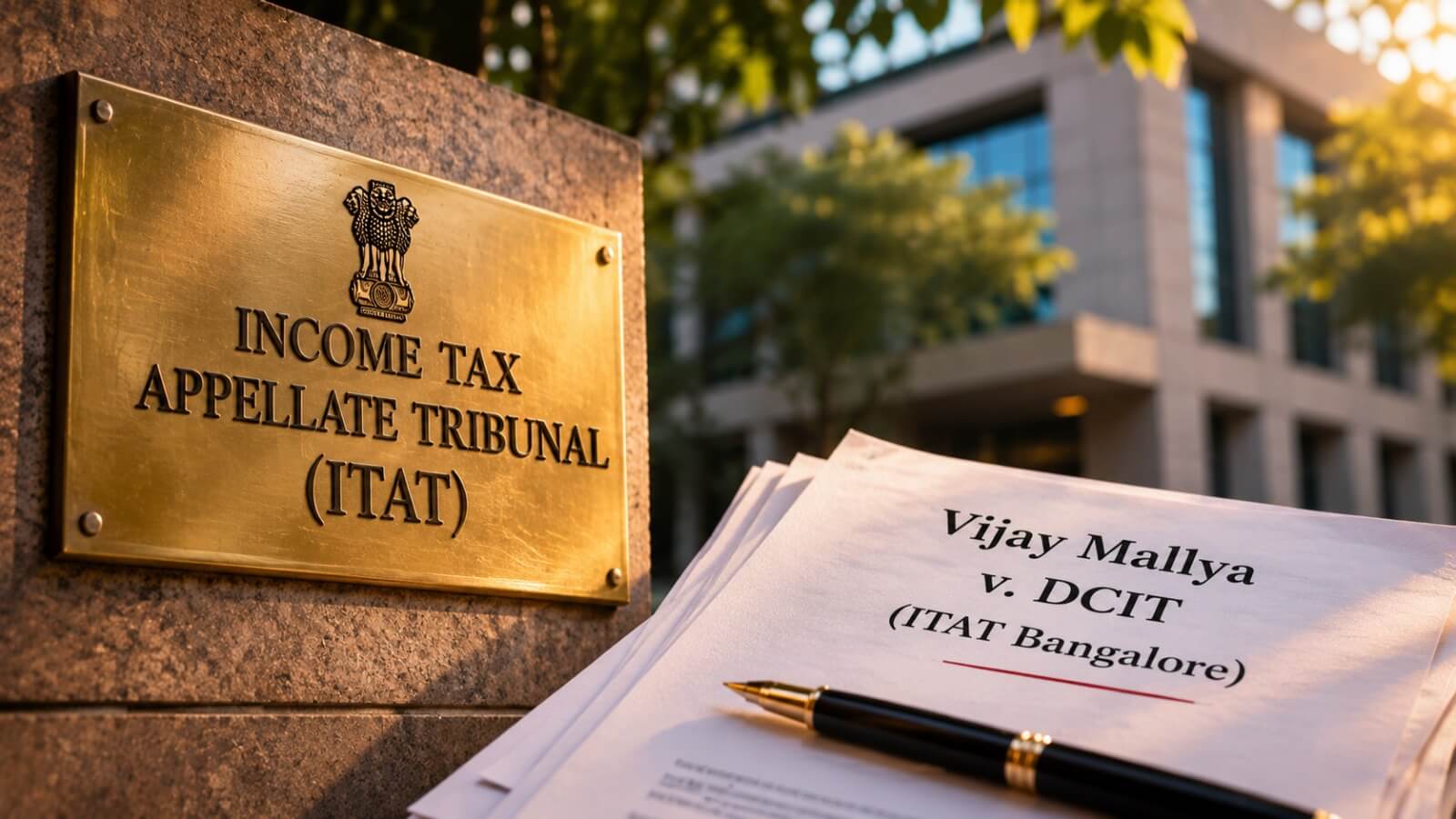


In Vijay Mallya v. DCIT (ITA Nos. 685 and 826/Bang/2024, order dated 4 November 2026), the ITAT Bangalore held that the USD 40 million (about ₹274.79 crore) Mr Mallya got from the Diageo group is taxable in India for AY 2016-17. The Tribunal called it business income under Section 28(ii)(a), because he was paid for giving up his role as Chairman and Director of United Spirits Ltd (USL), an Indian company. It also refused India-UAE treaty relief, because his UAE tax residency certificates (TRCs) were issued under the UAE-France treaty.
Most of our NRI clients will never negotiate a nine-figure exit from a listed company. But the questions in this case come up all the time in smaller matters. Where is income sourced when a foreign company pays a non-resident abroad for leaving an Indian role? Does any TRC unlock treaty relief? And which year is taxed when part of the money is deferred and later disputed? Let's walk through how the Bangalore "B" Bench answered, mostly against the taxpayer.
The Tribunal dismissed both appeals. The USD 40 million received on signing stays taxed in AY 2016-17, and the unpaid USD 35 million is taxable only in the years it is actually received.
Here's the case at a glance.
| Particular | Details |
|---|---|
| Case | Vijay Mallya v. Deputy Commissioner of Income Tax, Central Circle-1(1), Bangalore (and cross-appeal) |
| Bench | ITAT Bangalore "B" Bench: Balakrishnan S (Accountant Member), Keshav Dubey (Judicial Member) |
| Appeal numbers | ITA No. 685/Bang/2024 (assessee), ITA No. 826/Bang/2024 (Revenue) |
| Assessment year | AY 2016-17 |
| Hearing concluded / pronounced | 11 August 2026 / 4 November 2026 |
| Appeal against | CIT(A)-11, Bengaluru order dated 29 February 2024 |
| Amount | AO added USD 75 million (₹515.24 crore). CIT(A) cut it to USD 40 million (₹274.79 crore) |
| Outcome | Both appeals dismissed. ₹274.79 crore taxed in AY 2016-17. USD 35 million taxable only when received |
It was a February 2016 agreement under which Mr Mallya stepped down from USL in return for USD 75 million. Let's look at the background.
On 25 February 2016, Mr Mallya signed the deed with Diageo PLC, Relay BV and Diageo Holdings Netherlands BV. Diageo, through a subsidiary, is the majority shareholder and holding company of USL. He agreed to resign as Director and Chairman of USL and its affiliates, and he did resign as the deed required.
USD 40 million was paid on signing. The other USD 35 million was due in five yearly instalments of USD 7 million. Diageo never paid those. It alleged breaches of the deed and went to court in England and Wales seeking a refund. Mr Mallya's AY 2016-17 return, filed on 28 July 2016, left out the whole amount.
The timeline shows how a 2016 payment turned into a 2026 ruling.
| Date | Step |
|---|---|
| 25.02.2016 | Deed signed; USD 40 million received |
| 28.07.2016 | Return filed declaring ₹3.99 crore; processed under Section 143(1) on 08.08.2016 |
| 19.03.2020 | Reassessment notice under Section 148 |
| 17.12.2020 | Return filed in response; Section 143(2) notice on 21.12.2020 |
| 15.02.2021 | Assessee objects to reopening, citing non-residence and UAE treaty protection |
| 30.09.2021 | Section 147 order adds USD 75 million (₹515.24 crore) under Section 28(ii)(a) |
| 29.02.2024 | CIT(A) condones 153-day delay, admits additional evidence, cuts addition to USD 40 million |
| 04.11.2026 | ITAT dismisses both appeals |
Mr Mallya's counsel, CA Ramaswamy Vijayanand, argued on several fronts, while the Revenue kept things simpler.
The assessee's case:
The Revenue, through Senior Standing Counsel Raviraj Y V, relied on Sections 5(2) and 9(1). It also pointed out that the TRCs were issued for the UAE-France treaty, not the India-UAE treaty.
The Tribunal went point by point, and most points went to the Revenue.
No. The argument that a Section 147 order is invalid if it doesn't mention Section 143 was treated as a curable defect under Section 292B. The request to use the post-Finance Act 2021 reassessment regime also failed, because those amendments are prospective and the notice was issued in March 2020.
Yes. The Tribunal read the deed as a payment made "only to give up the rights and benefits attached to the position" of Chairman and Non-Executive Director of USL. Those rights sat in an Indian company and were extinguished for money, so the source was India.
Relying on the Supreme Court in Barendra Prasad Ray, it read "business connection" widely enough to include professional connections. It went further and held the income had actually accrued in India, so the deeming rules of Section 9 weren't even needed. A foreign payer, a non-resident payee and payment abroad made no difference.
The Tribunal said yes. Section 28(ii)(a) taxes, as business income, compensation paid to a person managing the whole or substantially the whole of an Indian company's affairs when that management ends or changes. The Tribunal held it applied because the resignation related to Mr Mallya's "appointment and governance rights" at USL.
Here's the catch. Mr Mallya argued a non-executive chairman doesn't manage substantially the whole of a company's affairs. The order doesn't analyse that point separately, and in our view it's the most obvious pressure point if the case goes further.
It wasn't decided on its own. The Section 28(va) argument was dismissed along with the other source grounds. The Tribunal gave no separate reasoning on whether any slice of the USD 75 million was for the non-compete. Its view rests on how it read the deed: the money was for giving up the position.
They were issued for the wrong treaty. This is the most practical lesson in the order.
The UAE TRCs Mr Mallya produced, including one dated 18 March 2015, were issued for the UAE-France DTAA. The Tribunal agreed with the CIT(A) that he "has not been able to prove" UAE residence under the India-UAE DTAA. It also recorded that he is a permanent resident of the UK and, for India-UK treaty purposes, a UK resident.
The CIT(A)'s alternative findings were upheld:
Either way, treaty relief didn't take the income out of India's reach.
Because that's what was actually received. The CIT(A) held the USD 40 million was real income paid on signing, so the English litigation didn't make it contingent. The unpaid USD 35 million "would be taxed whenever received" in later years. The Tribunal upheld both halves.
The Revenue's cross-appeal argued that all USD 75 million accrued on signing, and that a private contract dispute can't defer accrual. The Tribunal dismissed it in one paragraph: since the CIT(A)'s view on taxability was upheld in the assessee's appeal, the Revenue's appeal "does not survive".
| Issue | Assessee's position | Tribunal's finding |
|---|---|---|
| Reassessment procedure | No reference to Section 143; 2021 regime should apply | Curable under Section 292B; 2021 amendments prospective |
| Source of income | Offshore parties, payment abroad, situs follows owner | Income in fact accrued in India from rights in an Indian company |
| Character of payment | Non-compete; outside unamended Section 28(va) | Payment for relinquishing position; Section 28(ii)(a) applies |
| Treaty residence | UAE resident with nine TRCs; Article 13(3) | TRCs issued under UAE-France DTAA; UAE residence not proved; evidence points to UK |
| Contingency | English litigation makes payment contingent | USD 40 million actually received; taxable in AY 2016-17 |
| Deferred USD 35 million (Revenue) | Not argued | Taxable only when received; Revenue's appeal dismissed |
It leaves three big principles. Take away the famous names and they still hold.
The order is also notable for what it skips. It doesn't dig into whether a non-executive chairman manages "substantially the whole" of a company's affairs, or whether any part of the payment was for the non-compete. With this much money at stake, a further appeal to the Karnataka High Court wouldn't be surprising, and those two points are where it would likely focus.
A quick note: this order applies the Income-tax Act, 1961, which governs AY 2016-17. The Income-tax Act, 2025 took effect from 1 April 2026 with renumbered provisions, so section references will differ for later years.
Here are five practical steps, drawn from the case.
At Dinesh Aarjav & Associates, Chartered Accountants, we advise non-residents, overseas directors and returning Indians on the Indian tax treatment of severance, exit and settlement payments, on residential status, and on claiming DTAA relief with the right TRC and Form 10F paperwork. Where the Department has already reopened a past year, we handle reassessment and appeals.
The way an agreement is structured often decides the tax result, so talk to us before you sign, not after the notice arrives. Book a consultation with our team.
Related reading: DTAA Between India and the USA.
This article is for general information and is based on the Tribunal's order as pronounced. It is not legal or tax advice. Please consult a professional before acting on it.
Aarjav Jain is the Executive Director at Dinesh Aarjav & Associates, specializing in India–US cross-border transactions, NRI taxation, international tax advisory, and global investment structuring. With over 10 years of experience in project financing and cross-border advisory, he assists NRIs and businesses with regulatory compliance, repatriation planning, and international transaction structuring.



Stay in the loop, subscribe to our newsletter and unlock a world of exclusive updates, insights, and offers delivered straight to your inbox.

.webp)