WhatsApp
 Call Us
 Email Us
 Whatsapp Community

Would you like to schedule a call back


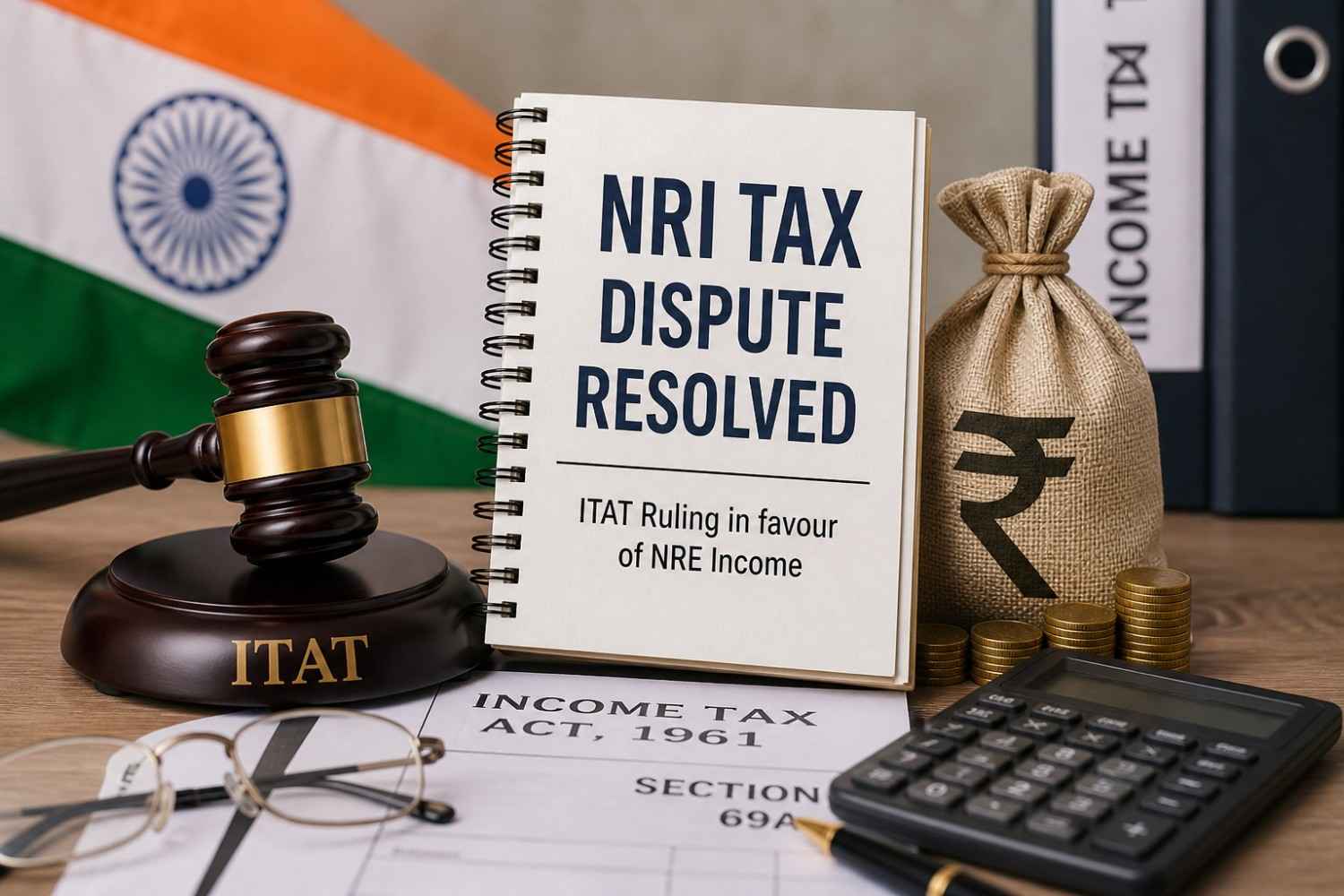


Why This ITAT Ruling Matters for NRIs
If you are a Non-Resident Indian (NRI) receiving foreign income and transferring money to India, this is one of the most important tax rulings you should understand.
A recent ITAT Ahmedabad judgment has clarified a critical issue:
Can foreign remittances in an NRE account be treated as unexplained income under Section 69A?
With increasing scrutiny through SFT (Statement of Financial Transactions), AIS, and Insight portal data, many NRIs are receiving tax notices in India—even when their income is earned abroad.
This blog explains:
An NRE (Non-Resident External) account is a bank account maintained by NRIs in India to park income earned outside India.
Key Features:
Important: While NRE accounts are generally tax-exempt, improper documentation can still lead to scrutiny.
The assessee, an NRI working in Kuwait, was flagged through SFT reporting due to large balances:
Since no return was initially filed, the Assessing Officer:
Are foreign remittances in NRE accounts taxable in India under Section 69A?
|
Particulars |
Amount |
Decision |
|
ICICI Bank (explained) |
₹1.04 crore |
Deleted |
|
ICICI Bank (unexplained) |
₹5.52 lakh |
Added |
|
HDFC Bank |
₹2.49 crore |
Added |
|
Insurance policy |
₹3.77 lakh |
Deleted |
1. NRE Account Deposits from Foreign Income Are Not Taxable
The ITAT clearly held:
If the source of funds is foreign income, NRE account deposits cannot be taxed in India
This reinforces existing jurisprudence and strengthens NRI tax positions.
2. Section 69A Cannot Be Applied Mechanicall
Section 69A applies only when:
However, in this case:
3. SFT / AIS Data Alone Is Not Sufficient Evidence
SFT mismatch does NOT automatically mean taxable income
The ITAT emphasized:
4. Minor Differences Cannot Be Taxed
The ITAT deleted ₹5.52 lakh holding:
5. HDFC Bank Matter Remanded
For ₹2.49 crore:
ITAT sent the case back to AO with direction:
Final Outcome (Quick Summary)
Short Answer:
No, NRE account deposits are NOT taxable if sourced from foreign income
However, taxation may arise if:
Common triggers:
To avoid tax disputes in India:
Maintain Documentation:
File Returns When Required:
Even if income is not taxable, filing may help avoid scrutiny.
Reconcile AIS & SFT Data:
This ruling is a strong precedent for NRIs facing tax notices in India due to SFT mismatches or unexplained bank balances.
At Dinesh Aarjav & Associates, we specialize in comprehensive NRI services, including:
Received a tax notice for NRE account or foreign remittance?
Our experts can help you respond, reconcile, and resolve the issue efficiently.
Contact Dinesh Aarjav & Associates today for expert NRI tax advisory services.
The ITAT ruling reinforces a crucial principle:
Foreign income routed through NRE accounts cannot be taxed without proper evidence
It also sends a strong message to tax authorities:
For NRIs, this is a powerful defence against unjust tax additions and reinforces the importance of proper documentation and compliance.
Also Read:
NRE Fixed Deposits: What Should You Know About Repatriation, Taxation, and Interest Rates?
NRE vs NRO Accounts: Which One Should NRIs Use for Investments and Expenses?
Benefits of Converting Savings to NRE Account Upon Gaining NRI Status
CA Dinesh K. Jain is the Founder and Mentor of Dinesh Aarjav & Associates, with over 35 years of experience in NRI taxation, cross-border advisory, project financing, and tax litigation. He has guided numerous NRIs and global families through complex tax and regulatory matters involving investments, repatriation, and international financial planning.






Stay in the loop, subscribe to our newsletter and unlock a world of exclusive updates, insights, and offers delivered straight to your inbox.

.webp)